To negotiate the price by grade you need a grade measured at delivery. With a measurement on the desk, the decision is no longer limited to "buy" or "don't": the batch is bought and the price is reset to the measured grade. Without one, only the two extremes remain. Refusing costs you the supplier; accepting makes the buyer pay the difference.
What does tasting catch at the purchase desk?
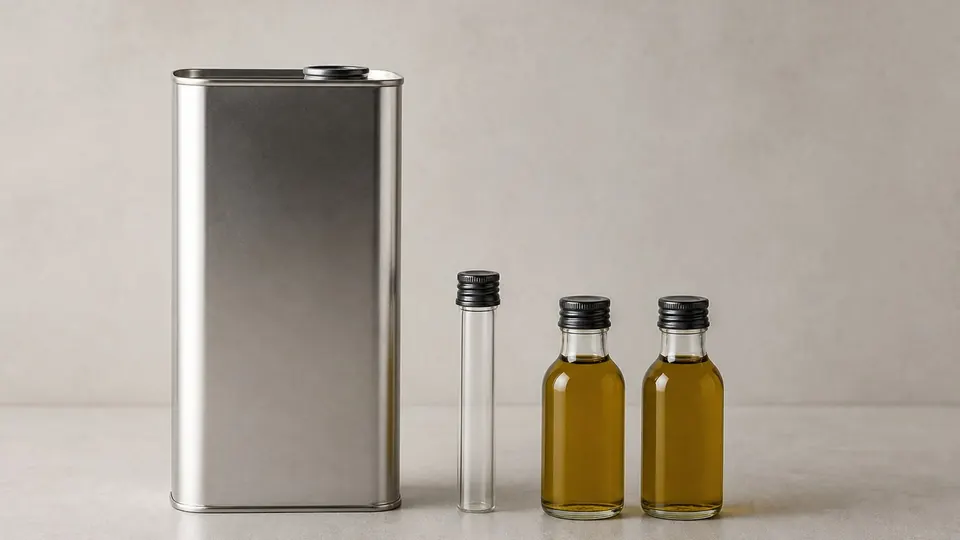
At harvest the purchase desk moves fast. The tanker arrives, a sample is taken, tasting is done and the price is discussed. An experienced taster catches defects, fermentation and ageing; those are real skills.
Where tasting struggles is a well-made blend. When refined oil or seed oil is mixed in at a low ratio, the taste profile is largely preserved. If the oil is young and strongly aromatic, the gap closes further. Why home tests and tasting fall short on adulteration is covered in detail in our post on fake olive oil.
In what order are the checks done?
- Tasting: for defects and quality. At the desk, at no extra cost.
- Pre-screening: for purity doubts and grade. At the desk, while the batch is still being received.
- Laboratory: only for batches flagged in the pre-screen. This is where the final decision lies.
Trying to apply all three to every batch at once stops intake. Done in sequence, laboratory cost falls only on suspect batches and the price discussion rests on a measured grade.
Who measures, and who decides?
In the field, the person taking the measurement and the person making the purchase decision are often the same, and that is a weakness. Separating the two roles is not always possible. Where it is not, the measurement record should at least land somewhere independent of whoever decides. A year later, the answer to "why did we buy this batch at this price" is then in the record.
How is the result shared with the producer?
The same day, and as it is. The producer may be unaware of the blend too; they may have received the oil already mixed. Seeing the result makes it possible to look for the problem further up the chain together. A result that is not shared comes back with the same deviation in the next shipment.
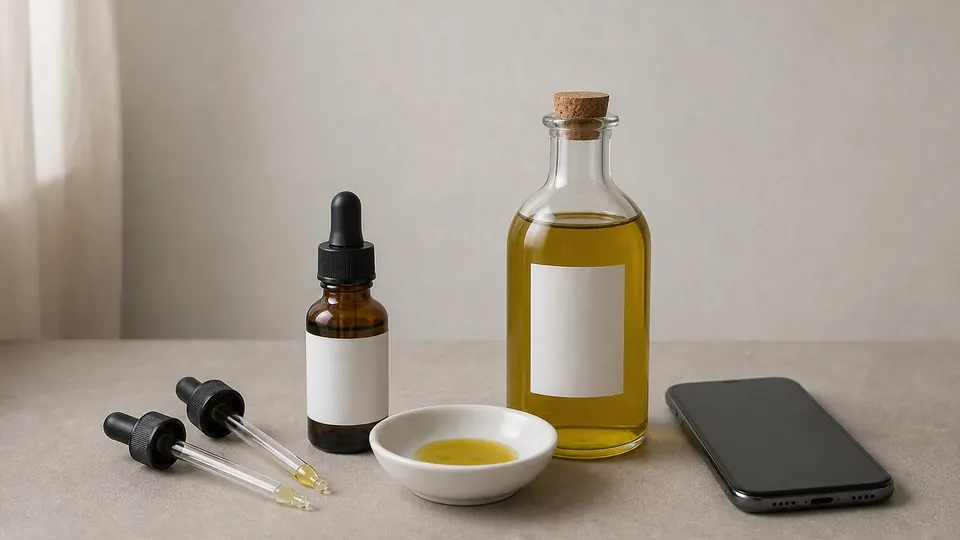
The Olivex reading is done at the desk. The kit consists of an amber 30 ml dropper bottle of pH-standard liquid, four glass droppers and a white dish. Five drops of oil go onto the liquid in the dish with a glass dropper, and the mobile app photographs the dish from above twice: in its initial state and after the drops have merged with the liquid. The result comes back as a grade from extra virgin down to low grade and adulterated, and is recorded with the batch and supplier details. Olivex does not replace laboratory analysis.