Own-label responsibility
For product sold under your own label, responsibility returns to you rather than to the producer.

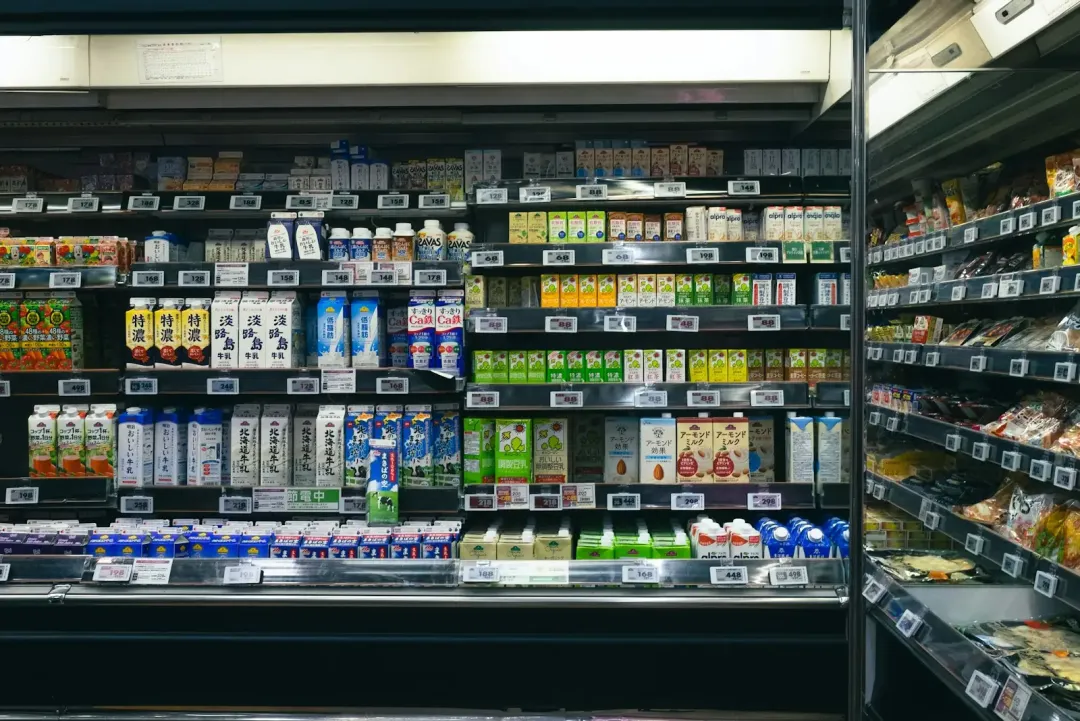
We support chains, speciality retailers and own-label sellers in reading the product they put on the shelf themselves.
Implementation
Olivex lets you see what you put on the shelf with your own eyes: sampling at goods-in, watching your own label and a fast answer to complaints.
Responsibility for what sits on the shelf belongs to the name that put it there; the shopper trusts the store, not the label. Product sold under your own label is filled by a contract facility, and the document your supplier provides does not show it belongs to that batch. When a complaint arrives, finding the batch it came from takes time, and product from the same supplier does not stay the same when the season turns.
Sampling at goods-in: You read from the batch arriving at the warehouse and see it is the product you expected before it reaches the shelf.
Watching your own label: By reading your contract-filled product through the season, you watch that it stays the same.
A fast answer to complaints: When a question comes in, you go to the record for that batch and see which supplier sent what.
Request a meeting
Data
Notifications on "fats and oils" to the EU Agri-Food Fraud Network in 2020; the group, mostly olive oil, was the most notified product category
Source: European Commission, The EU Agri-Food Fraud Network and the Administrative Assistance and Cooperation System: 2020 Annual Report, 2021Maximum free acidity (as oleic acid) per 100 g permitted for extra virgin olive oil
Source: Turkish Food Codex Communiqué on Olive Oil and Pomace Oil (No. 2017/26), Official Gazette 30183, 2017Risks
For product sold under your own label, responsibility returns to you rather than to the producer.
A supplier switched under price pressure brings a shift in quality that goes unnoticed on the shelf.
Olive oil is one of the categories where shoppers are most alert to the question of authenticity.
Regulation
Sets the product characteristics for the production, processing, labelling, storage, transport and marketing of olive oils and pomace oils. Grades such as extra virgin and virgin are defined by measurable quality and purity criteria, free acidity first among them.
Defines the categories of olive oil in the EU, the quality and purity characteristics of each category such as acidity and peroxide value, and the labelling rules. The category on the label of olive oil sent to the EU market must match these characteristics.
This section is for information only; official sources prevail for current obligations.
FAQ
Yes. You can make a reading anywhere you open the bottle; the product does not need to have been prepared in advance.
The document often does not show that it belongs to that batch. A reading at goods-in creates the batch's own record, and when a complaint arrives you go straight to it.
Meeting request
The first meeting reviews your product, sales channels and the risks you face, and recommends a suitable method.
Request a meeting